<?xml version="1.0" encoding="utf-8"?><feed xmlns="http://www.w3.org/2005/Atom" ><generator uri="https://jekyllrb.com/" version="3.10.0">Jekyll</generator><link href="https://weaponisedpasts.org/feed.xml" rel="self" type="application/atom+xml" /><link href="https://weaponisedpasts.org/" rel="alternate" type="text/html" /><updated>2026-09-08T13:37:14+01:00</updated><id>https://weaponisedpasts.org/feed.xml</id><title type="html">Weaponised Pasts</title><subtitle>Research project blog</subtitle><entry><title type="html">Call for Contributions - EAA 2026</title><link href="https://weaponisedpasts.org/news/calls_for_submission_eaa/" rel="alternate" type="text/html" title="Call for Contributions - EAA 2026" /><published>2025-12-19T00:00:00+00:00</published><updated>2025-12-19T00:00:00+00:00</updated><id>https://weaponisedpasts.org/news/calls_for_submission_eaa</id><content type="html" xml:base="https://weaponisedpasts.org/news/calls_for_submission_eaa/"><![CDATA[<p>We are delighted to announce that our session <strong>“Archaeological Heritage on Social Media: Identity Nexus, Contact Zone, or Battlefield?”</strong> has been accepted at the 32nd Annual Meeting of the European Association of Archaeologists (EAA 2026) in Athens next year.</p>

<p>The session is part of the conference theme <strong>“Crossing the divide. Archaeology and the open world”</strong> and focuses on how social media reshape identities, participation, and contestation around archaeological heritage.</p>

<p>We invite you to submit to present as part of our session via the official EAA submission system, which will be evaluated by the EAA programme committee. As this is a session with precirculated papers, authors of accepted contributions will be required to submit their full paper by 1 August 2026.</p>

<p>We very much look forward to your contributions! More detail about the objectives and themes of the session can be found below.</p>

<p><img src="/images/athens.jpg" alt="Athens" /></p>

<h2 id="detailed-session-information">Detailed session information</h2>

<p>Theme: Crossing the divide. Archaeology and the open world
Session format: Session with precirculated papers</p>

<h3 id="session-rationale">Session rationale</h3>

<p>The pervasive presence of archaeological heritage on social media is profoundly reshaping the theory and practice of public archaeology across communication, participation, and contestation. From text-based platforms such as Facebook and Wikipedia to image-based environments like Instagram and video-sharing platforms including YouTube and TikTok, archaeological heritage is increasingly encountered, interpreted, and mobilised in everyday digital practices.</p>

<p>This session explores how archaeological heritage on social media operates as an identity nexus, a contact zone, or a battlefield. On the one hand, social media platforms enable crowdsourcing, citizen science, and forms of “digital curation in the wild,” supporting participatory culture, co-creation, and creative engagement with the past. Archaeology-related online communities may function as affiliative or “creolised peripheral spaces,” facilitating interaction across national boundaries, professional divides, and distinctions between institutional (“capital I”) and informal (“small i”) identities.</p>

<p>On the other hand, these same environments are characterised by intense contestation. Archaeological heritage is frequently entangled with populist and nationalist discourses, pseudo-archaeology, memory wars, and the normalisation of heritage-based hostility and hate speech—dynamics that can spill over into offline conflict. Emotional responses to material remains are amplified through the semiotics of user-generated content and the algorithmic logics of platforms, raising critical questions about power, mediation, and responsibility.</p>

<p>Against this backdrop, the session brings together empirical, methodological, and theoretical contributions that critically examine the role of archaeology within contemporary networked communication and digital heritage ecosystems.</p>

<h3 id="submission-details">Submission details</h3>

<p>Details for submission are:</p>

<ul>
  <li>Call for Contributions: 19 December–5 February</li>
  <li>Submission system: <a href="https://submissions.e-a-a.org/eaa2026/login">EAA 2026 submissions</a></li>
  <li>Please select Session #211 when submitting your abstract.</li>
  <li>Abstracts are evaluated by the EAA Programme Committee.</li>
  <li>Full paper deadline (for accepted contributions): 1 August 2026.</li>
</ul>

<p>Further information on the conference, sessions, and submission procedures:</p>

<ul>
  <li><a href="https://www.e-a-a.org/EAA2026/EAA2026/Home.aspx">EAA 2026 conference website</a></li>
  <li><a href="https://www.e-a-a.org/EAA2026/sessions">EAA 2026 sessions</a></li>
  <li><a href="https://www.e-a-a.org/EAA2026/contributions">EAA 2026 contributions</a></li>
</ul>

<hr />

<p><strong>Session organisers</strong></p>

<ul>
  <li>Costis Dallas (Vilnius University; Athena Research Centre, Greece)</li>
  <li>Chiara Bonacchi (University of Edinburgh, United Kingdom)</li>
  <li>Ingrida Kelpšienė (Vilnius University, Lithuania)</li>
  <li>John-Paul Martindale (University of Edinburgh, United Kingdom)</li>
</ul>]]></content><author><name>Weaponised Pasts team</name></author><category term="conference" /><category term="call for contributions" /><summary type="html"><![CDATA[Call for contributions to our EAA 2026 session on archaeological heritage, identity and contestation on social media.]]></summary></entry><entry><title type="html">Job advertisement - Post-doctoral Research Fellow</title><link href="https://weaponisedpasts.org/news/job_advertisement/" rel="alternate" type="text/html" title="Job advertisement - Post-doctoral Research Fellow" /><published>2025-12-16T00:00:00+00:00</published><updated>2025-12-16T00:00:00+00:00</updated><id>https://weaponisedpasts.org/news/job_advertisement</id><content type="html" xml:base="https://weaponisedpasts.org/news/job_advertisement/"><![CDATA[<p>Come and work with us!</p>

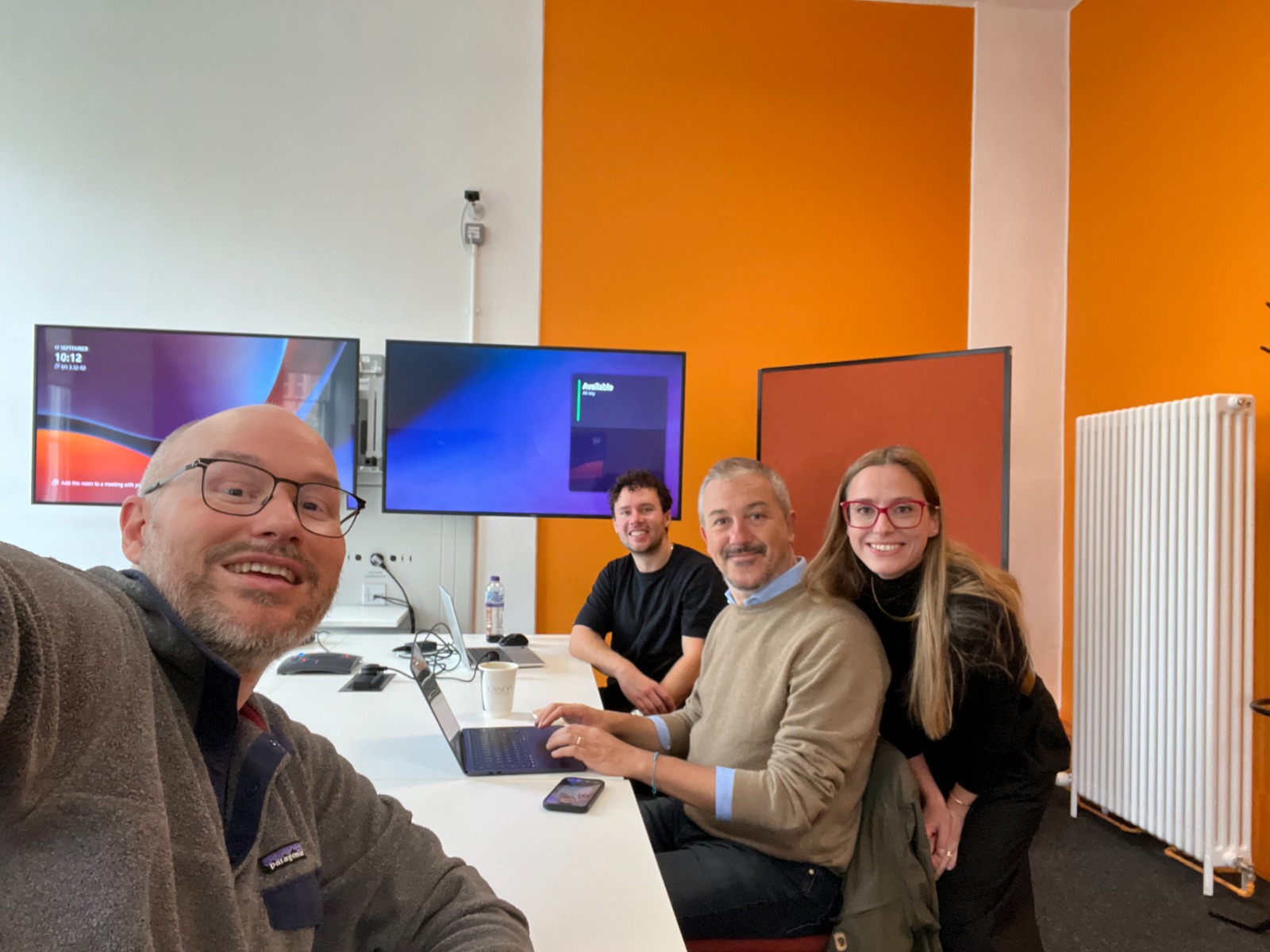
<p><img src="/images/team_launch.jpeg" alt="Team at the Launch" /></p>

<p>We are now advertising for a two-year full-time Post-Doctoral Research Fellow to come and join our project. This is an exciting role for someone to work on the experimental strand of our Leverhulme Trust-funded project, assessing the cultural evolution of heritage-based hostility using advanced transmission chain experiments and natural language processing techniques.</p>

<p>We are a closely collaborative team and this post offers significant opportunity for growth as an early career researcher. You will be based in the Psychology department at the University of Edinburgh and will be supervised by <a href="https://edwebprofiles.ed.ac.uk/profile/zachary-horne">Zachary Horne</a> and <a href="https://acerbialberto.com/">Alberto Acerbi</a>, and will also work closely alongside <a href="https://edwebprofiles.ed.ac.uk/profile/chiara-bonacchi">Chiara Bonacchi</a> and <a href="https://edwebprofiles.ed.ac.uk/profile/john-paul-martindale">John-Paul Martindale</a>.</p>

<p>Desirable candidates will have:</p>

<ul>
  <li>PhD (already defended) on a topic related to one or more of the following: psychology, cognitive science, linguistics, cultural evolution, diffusion of information or hostility or to a relevant topic.</li>
  <li>Evidence of experience undertaking research using advanced statistics.</li>
  <li>Evidence of ability to build advanced experimental designs in javascript or Python.</li>
  <li>Evidence of advanced NLP expertise using Python or R.</li>
  <li>Evidence of experience undertaking experimental research using advanced statistics.</li>
</ul>

<p>The job advert and information about how to apply can be found <a href="https://elxw.fa.em3.oraclecloud.com/hcmUI/CandidateExperience/en/sites/CX_1001/job/13521">here</a>. The start date for the post is the 1st of September 2026.</p>

<p>Please contact us at zhorne@ed.ac.uk or alberto.acerbi@unitn.it if you have any questions.</p>

<p>We wish you the best of luck in your application!</p>]]></content><author><name>Weaponised Pasts team</name></author><category term="opportunity" /><category term="recruitment" /><summary type="html"><![CDATA[A two-year post-doctoral research opportunity working on experiments and natural language processing for Weaponised Pasts.]]></summary></entry><entry><title type="html">Welcome to Weaponised Pasts</title><link href="https://weaponisedpasts.org/news/welcome/" rel="alternate" type="text/html" title="Welcome to Weaponised Pasts" /><published>2025-09-30T00:00:00+01:00</published><updated>2025-09-30T00:00:00+01:00</updated><id>https://weaponisedpasts.org/news/welcome</id><content type="html" xml:base="https://weaponisedpasts.org/news/welcome/"><![CDATA[<p>Welcome to the first news post for Weaponised Pasts!</p>

<!-- more -->

<p>Weaponised Pasts is an interdisciplinary research project grant funded by the Leverhulme Trust.</p>

<p>People use interpretations of the past to justify antagonistic othering, which can undermine democratic discourse, cause distress and even translate into violence offline, a process known as heritage-based hostility. Despite its substantial societal impact, little is known about the interplay of factors that lead to the diffusion of hostile interpretations of the past online. We will be using newspapers and social media data, and a series of behavioural experiments, to study how content-focused factors interact with context-related aspects of the communication on social media to predict the emergence, transformation and spread of this heritage-based hostility. Learn more about our research objectives <a href="/project.html">here</a>.</p>

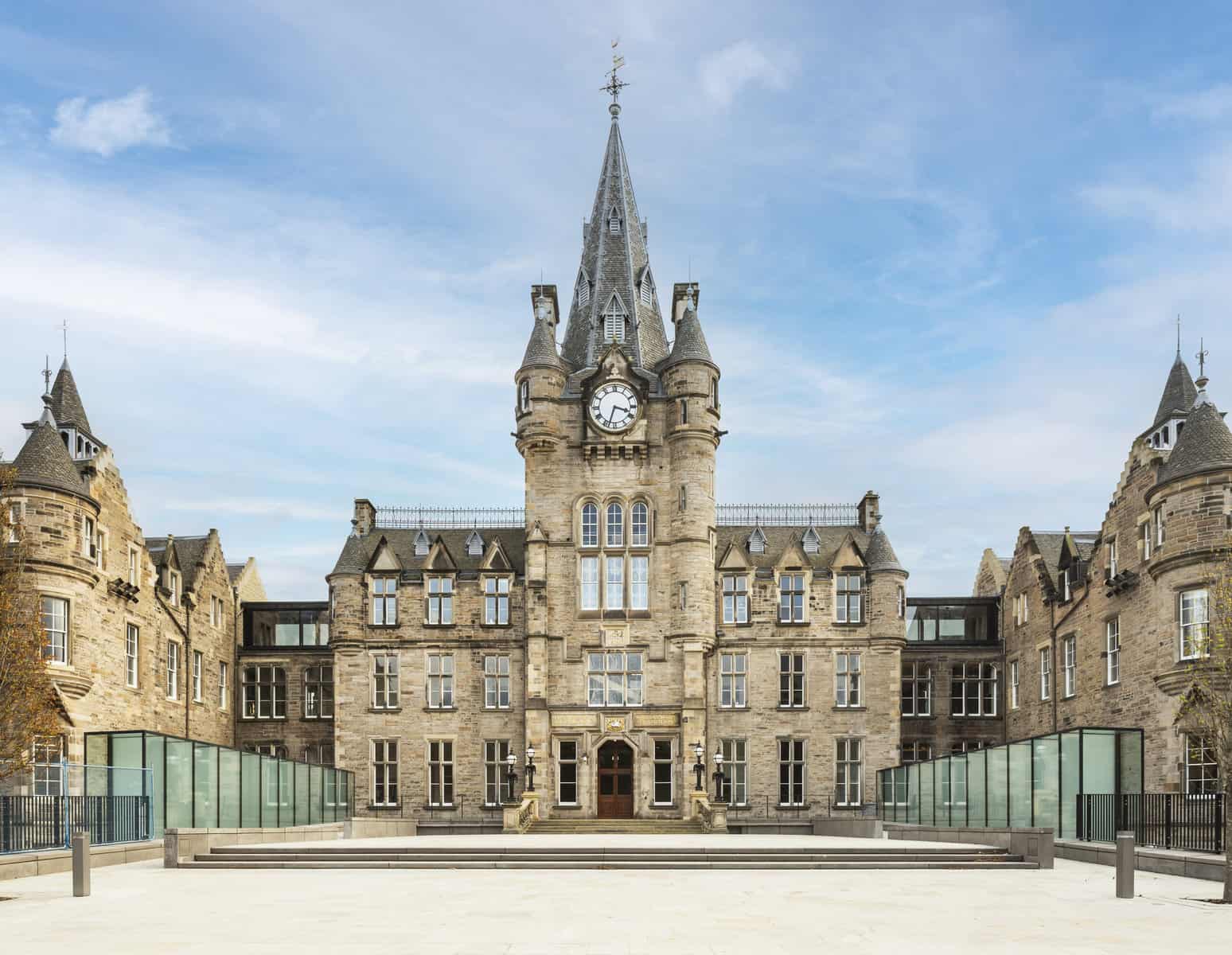
<p><img src="/images/efi_high-res.jpg" alt="Edinburgh Futures Institute" /></p>

<p>The project represents a collaboration between the University of Edinburgh and the University of Trento, and will break new ground methodologically and empirically by combining approaches from heritage studies, cognitive psychology and cultural evolution for the first time. The project is led by PI Dr Chiara Bonacchi, with CIs co-leadership from Dr Zachary Horne and Dr Alberto Acerbi, and the primary research is conducted by Dr John-Paul Martindale. Learn more about the project team <a href="/people.html">here</a>.</p>

<p>During the project, we will be maintaining an active presence on this website and on social media to keep you informed about our work and opportunities to learn more. If you are interested in keeping up-to-date, please <a href="/contact.html#cta">subscribe here</a> and follow us on <a href="https://www.linkedin.com/company/108832533/">LinkedIn</a>, <a href="https://x.com/WeaponisedPasts">Twitter</a>, and <a href="https://bsky.app/profile/weaponisedpasts.bsky.social">BlueSky</a>.</p>

<p>We look forward to telling you about our formal launch event next week!</p>]]></content><author><name>Weaponised Pasts team</name></author><category term="project update" /><summary type="html"><![CDATA[Introducing Weaponised Pasts, our research into the online spread of heritage-based hostility, and the team behind the project.]]></summary></entry></feed>